

Gumede pins hope on debt-to-equity strategy in bid for Tongaat

Caption:
Darnall mill, one of Tongaat Hulett’s four mills in KwaZulu-Natal.
📷 SUPPLIED
Almost all battles inevitably produce winners and losers. The winners usually take all, and losers are left to lick their wounds.
In rare occasions, battles end in ties with no clear victors or losers.
The unfolding battle for control of South Africa’s second largest sugar producer, Tongaat Hulett, is no different. After the dust settles, it will also have its own winners and losers.
The rivals for the 134-year-old sugar giant are employing different strategies as they seek to outdo each other to secure victory.
But the strategy used by the Vision Group consortium, one of the rivals seeking to control Tongaat, has caught my attention. Its strategy was employed more than a decade ago in another fierce corporate battle.
The Vision consortium — led by IT billionaire Robert Gumede and Zimbabwean businessman Rute Moyo — purchased a large portion of Tongaat’s R11.7bn debt from lenders during a business rescue process aimed at saving the company from liquidation.
According to media reports, the consortium bought R8bn worth of Tongaat’s debt mostly from Standard Bank, essentially taking over from the lender as one of Tongaat’s major creditors.
Another senior creditor is the Industrial Development Corporation (IDC), which injected funds into Tongaat during the business rescue emergency credit, also known as post-commencement funding (PCF).
It has been reported that the Vision consortium intends to convert the debt into equity in the event Tongaat and its shareholders are unable to pay off the debt.
As I have already indicated, Vision’s debt-to-equity conversion strategy has been used before to devastating effect against other shareholders, forcing them to relinquish their companies to creditors.
More than a decade ago, billionaire investor and former MTN CEO Phuthuma Nhleko executed this strategy to perfection when his investment company, Worldwide African Investment Holdings (WAIH), took control of cement maker Afrisam. In 2011, WAIH (later renamed Phembani Group) bought portions of Afrisam’s debt from lenders and later exchanged the debt claims for shares.
The circumstances surrounding the battles for control of Afrisam and Tongaat are strikingly similar, but there is one major difference. When Nhleko bought Afrisam’s debt, the cement maker was not under business rescue. The company’s monstrous debt was restructured, saving it from a possible collapse.
On the other hand, Tongaat is under business rescue and possibly facing liquidation if it is not recapitalised and its debt restructured.
So how did Nhleko insert himself at Afrisam? In 2011 he saw an opportunity to lay his hands on the cement manufacturer after its major shareholders struggled to service loans they had taken to purchase a substantial stake in the company. The transaction came about when Swiss multinational Holcim sold most of its South African cement business (Afrisam) to a BEE consortium led by Bunker Hills Investments.
This deal, concluded in 2007, was financed largely with debt, leaving Afrisam and its key shareholders saddled with a huge interest bill that later proved to be unserviceable. That’s when Nhleko and other senior creditors, including the Public Investment Corporation (PIC), pounced.
The cement producer was racing against time to pay back R11bn to its creditors by the end of January 2012. This amount was part of a R19bn debt the company was carrying.
As it became clear that Afrisam’s key shareholders, Bunker Hills and Holcim, were going to default, senior debtholders Phembani and the PIC opted to restructure the debt instead of placing Afrisam under business rescue.
The debt restructuring proposed by the creditors involved slashing the R19bn debt by R8.4bn and converting the rest of the debt into equity. This course of action was catastrophic for Bunker Hills and Holcim, as it meant their shareholding would be wiped out.
They tried to legally interdict the creditors from implementing the debt restructuring. But the court ruled in favour of creditors. Bunker Hills had also blocked earlier attempts by Phembani to buy a controlling stake in Afrisam, accusing Phembani of “hijacking” the cement company and “cannibalising” its black shareholders.
This strong opposition to Phembani’s advances forced the investment group to change tack. Nhleko, who cut his teeth in corporate finance at Standard Bank, had an ace up his sleeve. The cunning dealmaker used his background in corporate finance to outmanoeuvre Bunker Hills and Holcim.
He switched to plan B by buying portions of Afrisam’s outstanding debt in the open market, thereby becoming one of Afrisam’s major creditors. In the end, Phembani and the PIC became major shareholders of Afrisam after converting their debt claims into equity in early 2012.
Phembani was reported to have carved out for itself a 30% stake, in addition to securing management control of the cement company.
As the business rescue of Tongaat has morphed into a liquidation dispute, I can’t help but wonder if this corporate saga is going to follow Afrisam’s exact script. Tongaat is in the same spot as Afrisam was in 2011 — caught between a rock and a hard place. It is up against a senior creditor (Vision) that holds all the cards.
Vision has called in its debt, prompting Tongaat’s business rescue practitioners to apply for provisional liquidation last month in the Durban high court. But the provisional liquidation application is facing opposition from the IDC as a senior creditor and RGS Group Holdings, a former unsuccessful bidder for Tongaat assets.
The fate of the company is now in the hands of judge Sanele Hlatshwayo, who has to adjudicate on two critical matters. He has to determine if Tongaat has enough cash in its coffers to cover its operations for at least six months, and he must determine if Tongaat has sufficient cash reserves to pay off its debt to secured creditors, unless there is a repayment agreement between the company and its creditors.
If these two conditions are not met, Hlatshwayo will be left with no option but to approve the provisional liquidation. Alternatively, Tongaat could be saved if the IDC and Vision enter into an agreement to convert their debt claims.
The IDC must covert its PCF into a revolving working capital facility, while Vision must convert part of its debt claims into equity to improve Tongaat’s balance sheet.
The sugar company’s debt woes can be traced back to accounting irregularities that first came to public light in 2019. It is alleged that Tongaat’s executives manipulated financial information to inflate profits and asset values, the intention being to mislead investors to believe that the company was more profitable than it really was.
These executives were paid hefty bonuses on the back of this deceit. But underneath this deceit, the company was underperforming due to poorly performing mills and stiff competition from cheap sugar imports. By late 2022 its revenues were under pressure, triggering a debt fireball.
This is what brought Tongaat to business rescue three years ago in a bid to save 250,000 jobs across the company’s supply chain — including key suppliers such as sugarcane farmers and delivery truckers.
The restructuring of Tongaat’s debt, along with its operations, must be accompanied by industry reforms. The department of trade, industry and competition needs to come up with a policy response to the influx of cheap imports, which are decimating local players.
It must either subsidise local players or impose trade tariffs on cheap imports instead of sitting on its laurels and watch the carnage play out.
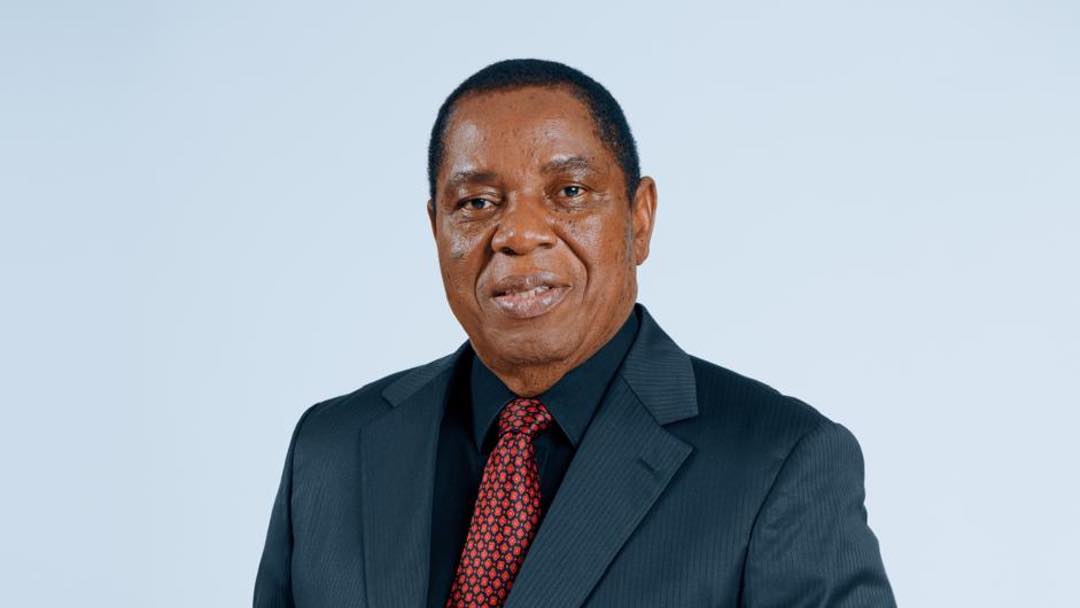
Caption:
Robert Gumede, leader of Vision Group consortium📷 SUPPLIED
As the liquidation dispute plays itself out at the Durban high court, I am putting my money on Gumede and his Vision partners emerging as new industrialists in the sugar industry, just as Nhleko emerged as an industrialist in the cement industry about 14 years ago.
Future acquirers of businesses in financial distress will study the strategic acquisitions of Tongaat and Afrisam. They can surely learn a thing or two from the playbooks of Gumede and Nhleko, which offer blueprints on how to go about acquiring distressed businesses through debt restructuring instead of straight-forward cash acquisitions.