

Eastern Cape town revolts against ‘commodification of rural life’

Caption:
The Eastern Cape town of Engcobo, which is on R61 highway, was shut down last week by the residents.
📷 NL-GRAPHICS
Friends, South Africans, countrymen, lend me your ears. The town of Engcobo in the Eastern Cape is burning.
The Lesotho Mountains have breathed their icy breath into the valleys of Engcobo, a white and biting gust that settles over the plains with the kind of cold weather that kills livestock.
But the cold outside is nothing compared to the fire within. The town is shut down, ablaze with a refusal that has summoned Eastern Cape Premier Oscar Mabuyane, drawn the national government into its orbit, and called the King himself to bear witness.
Over the coming days, there will be talks about talks. Where are the journos? Shout out to Ground-Up which is on the ground reporting from emaQwathini, a local CODESA where the powerful will gather to manage the unmanageable.
But let us not be fooled by the spectacle of negotiation. This is not a service delivery protest to be pacified with promises. This is a peasants’ revolt reborn in the winter of 2026. The revolt carries the memory of 1879 like a birthright, like a passbook burning event.
The residents of Engcobo are saying: 'Now we are not playing!'. They have shut down the town.
On the eve of the 4th November local government elections, the residents are further saying: ‘We have been patient. We have followed the procedures. We have written the letters. You have accepted many of our marches and petitions. We have attended the meetings.
‘We have played the game according to the rules that you, the state, established. And still, our water does not flow. Still, our roads crumble and are filled with uncollected debris and sewerage.
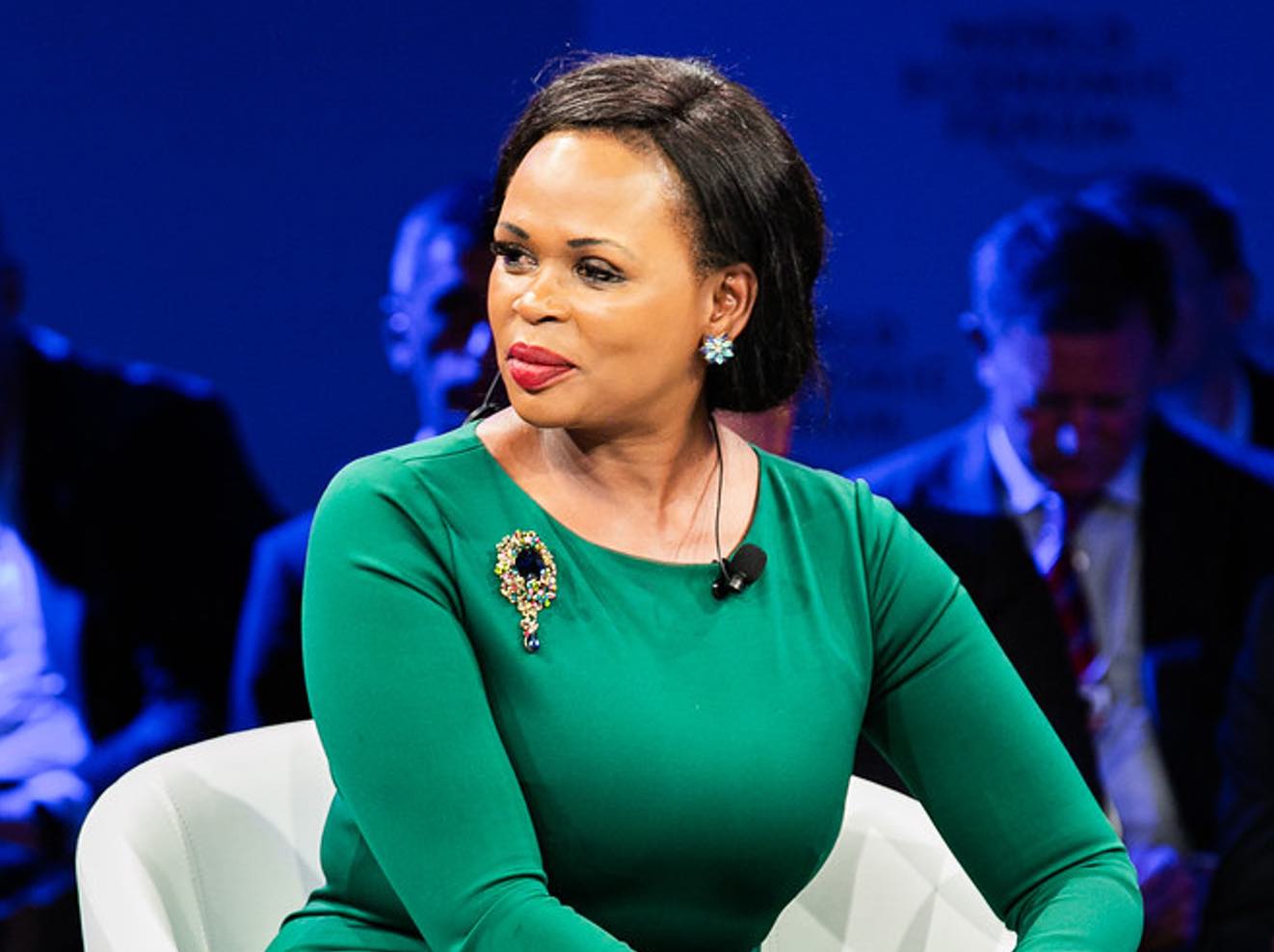
Caption: Thandeka Gqubule-Mbeki
📷 SUPPLIED‘Still, our children are educated in buildings that should have been condemned a decade ago...or in hovels shored up by large trees. Still, the money that was meant for us finds its way into pockets we do not know.’
The local political and bureaucratic elites are in the pockets of criminals, who fund their campaigns to jump the party lists so they can line up for tenders.
In response to this political and bureaucratic disrespect, the residents are saying: "So now we will not play."
‘We will not send our children to your schools. We will not drive on your roads. We will not buy from your commercial buddies' shops. We will not participate in your economy. We will close the town and wait...till a more potent force enters the chat’.
The modern municipal state extracts differently from its colonial predecessor, but it extracts nonetheless. Where the magistrate once collected taxes, the municipal manager now collects tenders.
Where the colonial administration once controlled movement, the modern administration now controls procurement.
Where the British once parcelled land, the elites now parcel contracts. The logic is the same: convert public resources into private benefit, convert community into constituency, and convert rural people into commodified subjects of an administration and political market that answers not to them but to a predatory hierarchy of patronage that stretches from the village to the province and to the capital city.
In 1879, a magistrate was imposed by a distant colonial government, Britain. In 2026, a municipal manager was imposed through opaque political processes.
In 1879, land was taken without consent and taxes drained the community of its wealth. In 2026, corruption drains the municipality of its resources.
These Engcobo valleys of emaQwathini have always produced leaders who refuse administrative violence. Chief Fubu, who led the 1879 rebellion. Dr AB Xuma, who would later lead the African National Congress (ANC) and remind the world that Africans were not children to be governed but adults to be consulted.
And now the present-day residents, students, workers, grandmothers, and traditional leaders are shutting down the town with a discipline that would impress any military commander.
These hills have heard the sound of resistance before. These rivers have witnessed the gathering of warriors before. These paths have carried messengers of rebellion before.
The past does not sleep in Engcobo. It walks the streets. It sits in the meetings. It speaks through the elders who remember their grandparents' stories of the 1879 uprising. The community itself, and not the state, not the party, not the administration, is the primary custodian of justice.
The class struggle beneath the shutdown is invisible to the metropolitan corporate press that is wearing class blinkers and intellectual straight-jackets. Shut out to a democratic press, not the press that represents the the voice of the rich.
Seen through the lens of history, both uprisings reveal themselves as moments when rural people confront the commodification of life itself.
In 1879, the colonial state tried to convert communal land into taxable property. In 2026, the municipal state converts public services into a market in patronage commodities.
Water becomes a political favour. Roads become electoral currency. Jobs become rewards for loyalty. Tenders become instruments of extraction. The services that should be rights become privileges to be distributed by those in power. Both systems treat rural people as objects of administration, not subjects of democracy.
The shutdown is therefore a struggle, a confrontation between those who live the consequences of misgovernance and those who benefit from it.
'Service delivery protest' is a euphemism for the real anti-corruption struggle, not the one waged only in air-conditioned offices in Johannesburg and Cape Town.
It is a struggle against the commodification of everything, and in this sense the service delivery protest movement is SA's Occupy Wall Street Movement in the sense of both movements' rejection of neoliberalisation and its corrosive effects on society, community, and democracy.
Between the majority who have been reduced to clients and the minority who have become patrons. Between those who depend on the state for survival and those who depend on the state for enrichment.
I was possessed with enough folly to argue with a bunch of laughable anti-state academics about the importance of the state and democracy to poor communities. They were deaf.
The revolt in Engcobo is a revolt against the idea that governance is a marketplace.
Engcobo is one of the few rural towns in SA where the past does not sleep. The rebellion of 1879 is not a museum piece, not a footnote in a history book, not a date to be commemorated with speeches and then forgotten. It is a political inheritance, a living tradition, a memory that informs the present.
The people are shutting down the town today in a 150-year tradition of rural self-assertion. They are saying, 'We are not customers of the state. We are not beneficiaries of the state's generosity. We are not clients to be managed, subjects to be administered, or recipients to be patronised'.
The uprising in Engcobo is the continuation of a long struggle against the commodification of rural life. The same that Govan Mbeki described in his iconic journalistic book, The Peasant's Revolt.
The peasant's revolt lives in Engcobo.
It flows from 1879 to 2026, from the fires that burned the magistracy to the shutdown that closed the town, from Chief Fubu's warriors to the grandmothers blocking the R61 road this bitterly cold winter.
Nearly 150 years later, the same valleys hold a different fire. The town of Engcobo has closed its doors, roads blocked, schools silent, and the R61 empty of commerce.
And as the icy snow thaws and the Premier presides over "stakeholder engagements", it should focus the minds of elites that the R61 is not an inconsequential rickety little rural road.
In fact, the R61 is the spine of inland–coastal logistics in the eastern half of the Eastern Cape, enabling freight movement, rural market access, and the development of the Wild Coast Special Economic Zone (SEZ).
The R61 is one of the province’s most economically consequential roads, and its significance becomes even clearer when you look at how it links the province’s two major port cities of Gqeberha (formerly Port Elizabeth) and KuGompo (formerly East London) — to the interior, to Mthatha, and to the Wild Coast SEZ.
• Gqubule-Mbeki is a journalism lecturer and former journalist. She writes in her own personal capacity.